Nature to fabric: Eco-printing hands-on training

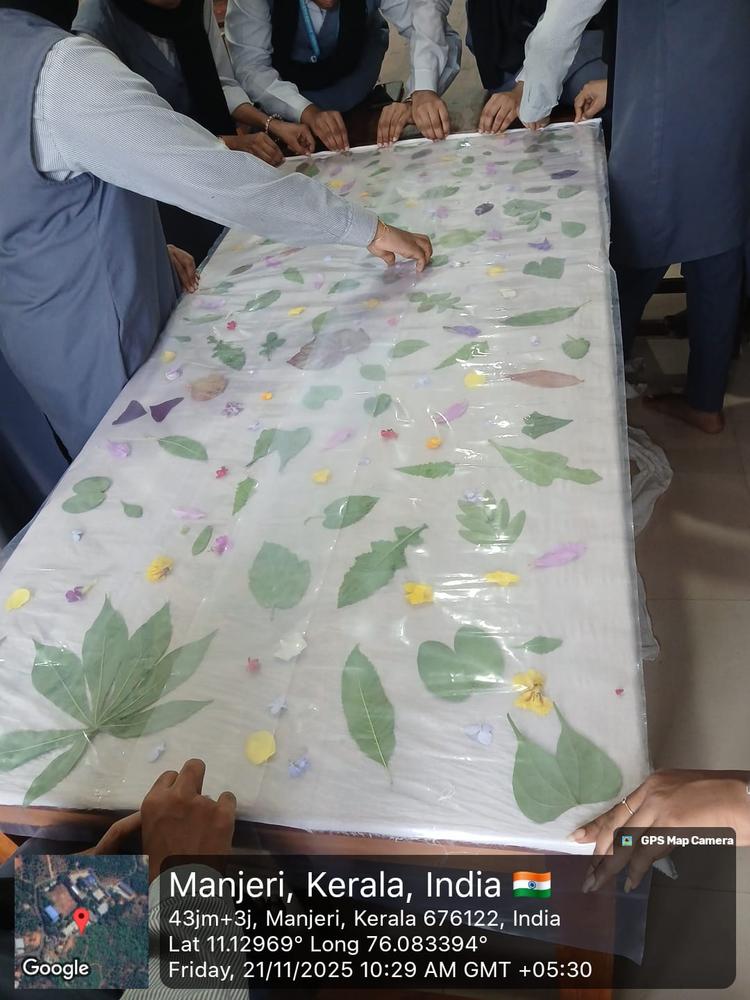
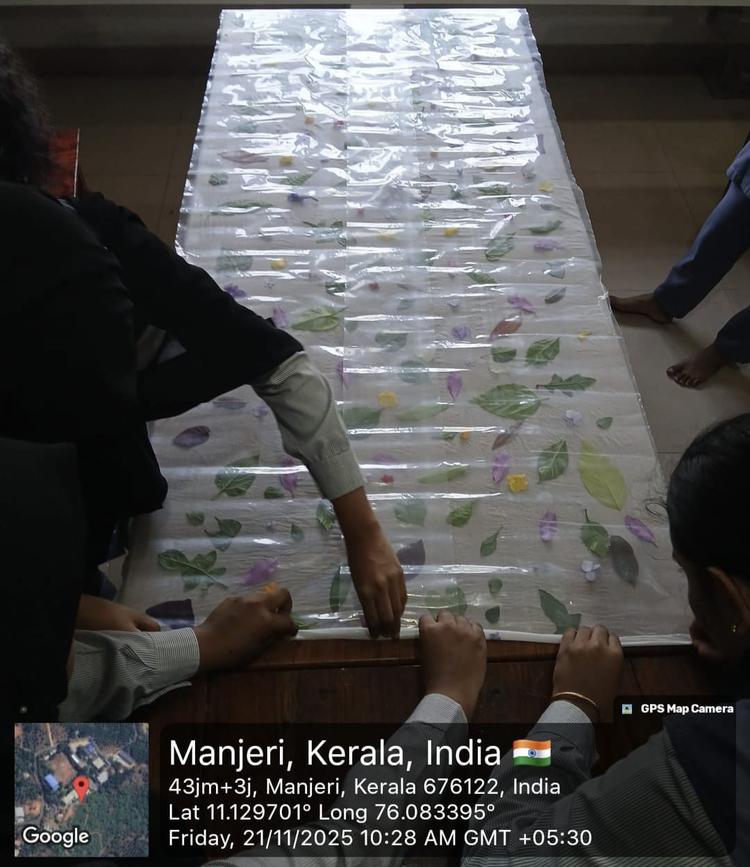
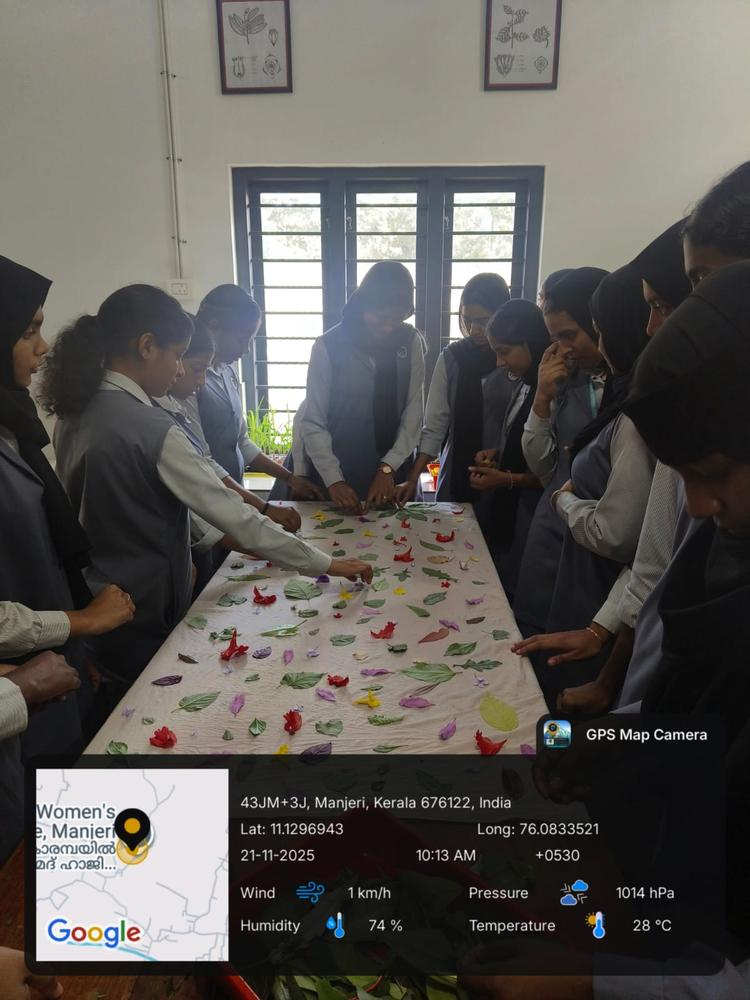
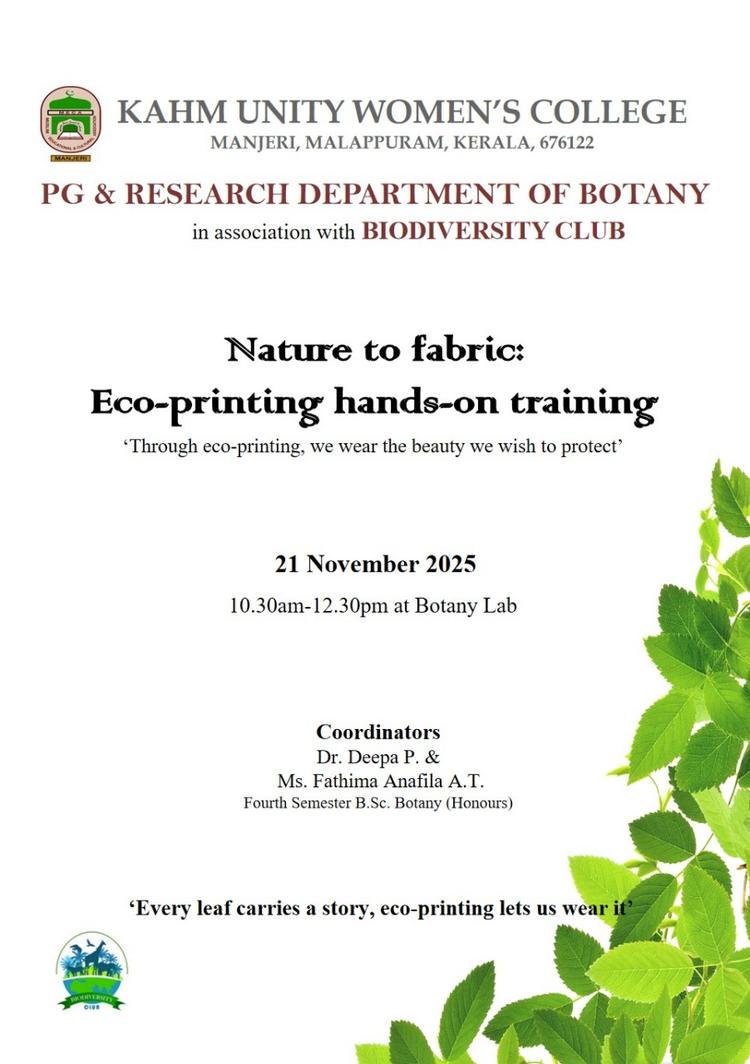
PG and Research Department of Botany, KAHM Unity Women's College, Manjeri, in association with the Biodiversity Club organized a Hands-on Training in Eco-printing for Fourth Semester B.Sc. Botany (Honours) students on 21 November 2025 at Botany lab. The programme designed to integrate biodiversity awareness with botanical science by introducing students to the sustainable art of eco-printing while highlighting the biological and ecological significance of plant materials used in the process. The session began with an introduction to eco-printing as an eco-friendly technique that utilizes the natural pigments found in leaves and other plant parts. Students learned how plant diversity, pigment variability, leaf anatomy and phytochemical composition influence the outcomes of natural dye extraction and print formation. This foundation helped them appreciate both the ecological relevance of using plant-based materials and the scientific principles that govern pigment release. Throughout the training, students were guided through essential stages of the eco-printing process including plant material selection, arrangement of leaves, bundling techniques, steaming and fixation of natural dyes. As they worked with different species, students observed how variations in plant morphology, vein patterning, cuticle thickness and metabolite content contributed to distinctive print characteristics. This hands-on experience strengthened their understanding of plant anatomy, secondary metabolites such as tannins and flavonoids, and their role in natural dyeing. From a biodiversity perspective, the activity encouraged students to explore and recognize the richness of local flora, reinforcing the importance of conserving plant diversity and promoting nature-based alternatives to synthetic dyes. The training also inspired a deeper appreciation for sustainable craft practices that minimize environmental impact. All students actively participated in the session, and their curiosity and engagement ensured that the learning objectives - both botanical and ecological - were fully achieved. The programme effectively coordinated by Dr. Deepa P. and Ms. Fathima Anafila A.T. (Fourth Semester B.Sc. Botany (Honours), whose guidance facilitated smooth execution and supported students in confidently applying eco-printing techniques.