INDUSTRIAL VISIT TO TEA FACTORY AT VAGAMON AND RAMAKKALMEDU
As part of the curriculum for the subject Social Entrepreneurship (Minor B), the Department of Commerce organized an industrial visit to Vagamon and Ramakkalmedu to provide students with practical exposure to entrepreneurial initiatives rooted in social and environmental responsibility. The visit aimed to bridge theoretical knowledge with real-world understanding of how entrepreneurship can contribute to community development, sustainability, and rural empowerment.
Objectives of the Visit are to understand the practical implementation of social entrepreneurship models,to study the working of a tea factory and its contribution to local livelihood.to explore eco-tourism initiatives promoting sustainable development,to interact with a social entrepreneur and learn about challenges and success stories in rural entrepreneurship,to provide students with experiential learning through exposure to community-based projects and natural resource management.
We also Visited other places:
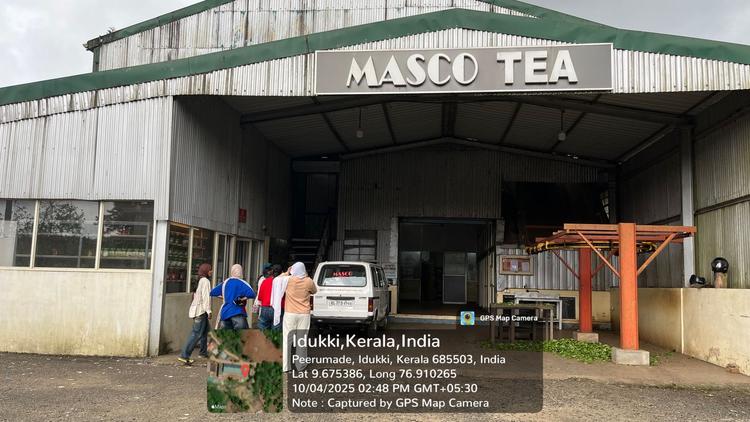
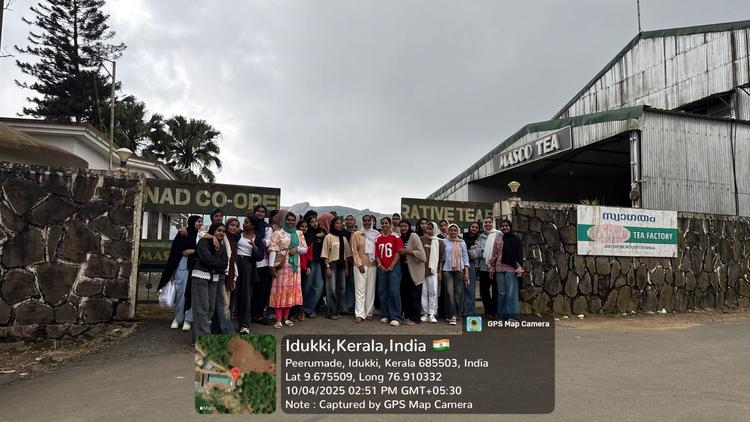
a) Tea Factory – Vagamon
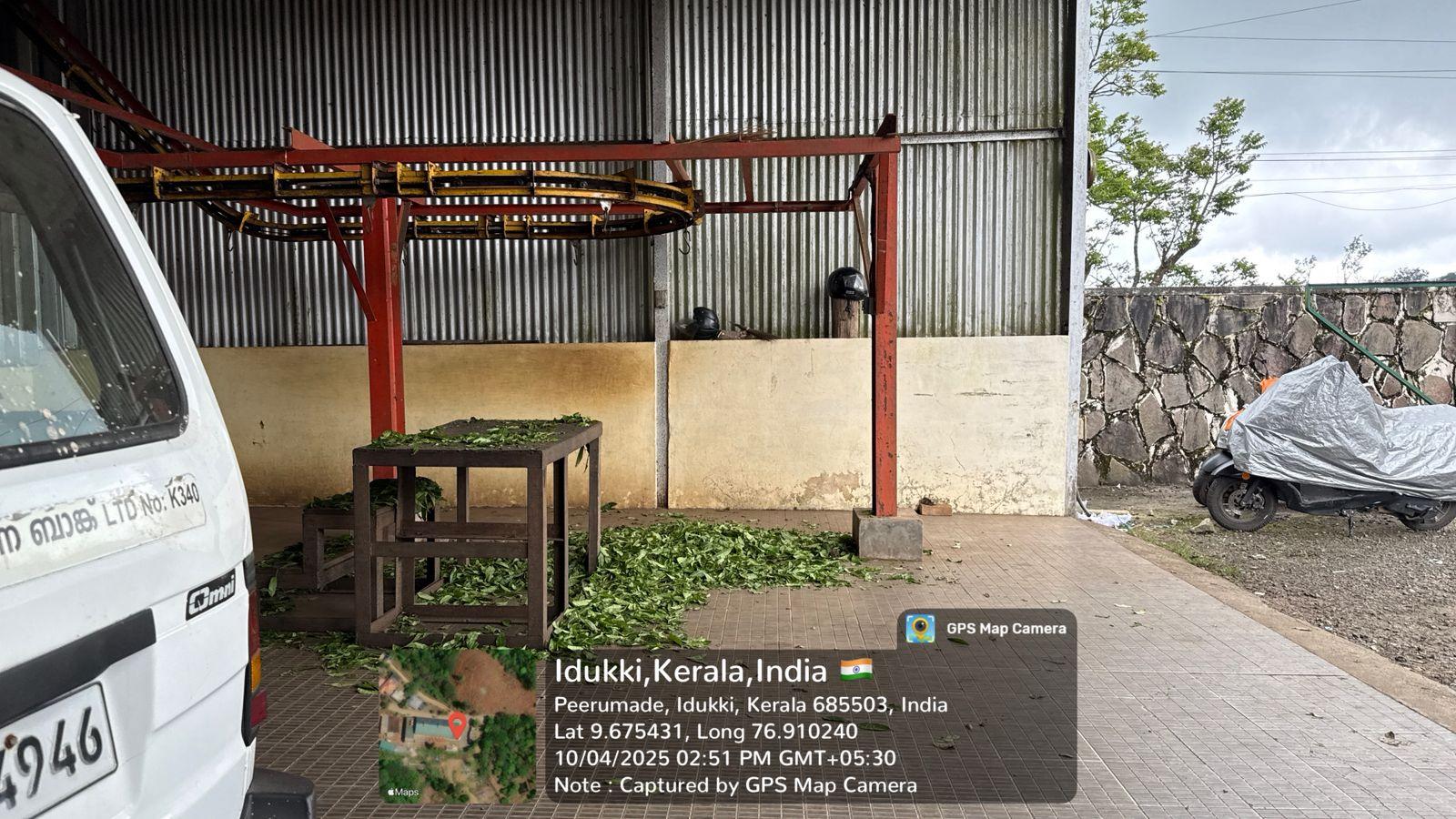
Students visited a local Tea Processing Factory where they observed the various stages of tea production including withering, rolling, fermentation, drying, and grading. The visit provided insights into how small-scale industries in hilly regions support the local economy by creating employment opportunities for local communities. Discussions with the factory manager highlighted how sustainable agricultural practices and fair-trade principles are applied to ensure social impact and environmental balance.
b) Interaction with Social Entrepreneur – Mr. Ramaiyya
A key highlight of the visit was an interactive session with Mr. Ramaiyya, a noted social entrepreneur from Ramakkalmedu. He shared his entrepreneurial journey, focusing on initiatives such as rural skill development, eco-tourism ventures, and community-based projects.
During the interview, Mr. Ramaiyya emphasized the importance of empowering local communities through capacity building,balancing profit motives with social welfare objectives,leveraging local resources and traditional knowledge for sustainable ventures.
Students asked questions regarding funding challenges, community participation, and the future of social entrepreneurship in rural Kerala. The session was highly insightful and motivational.
c) Kurisumala
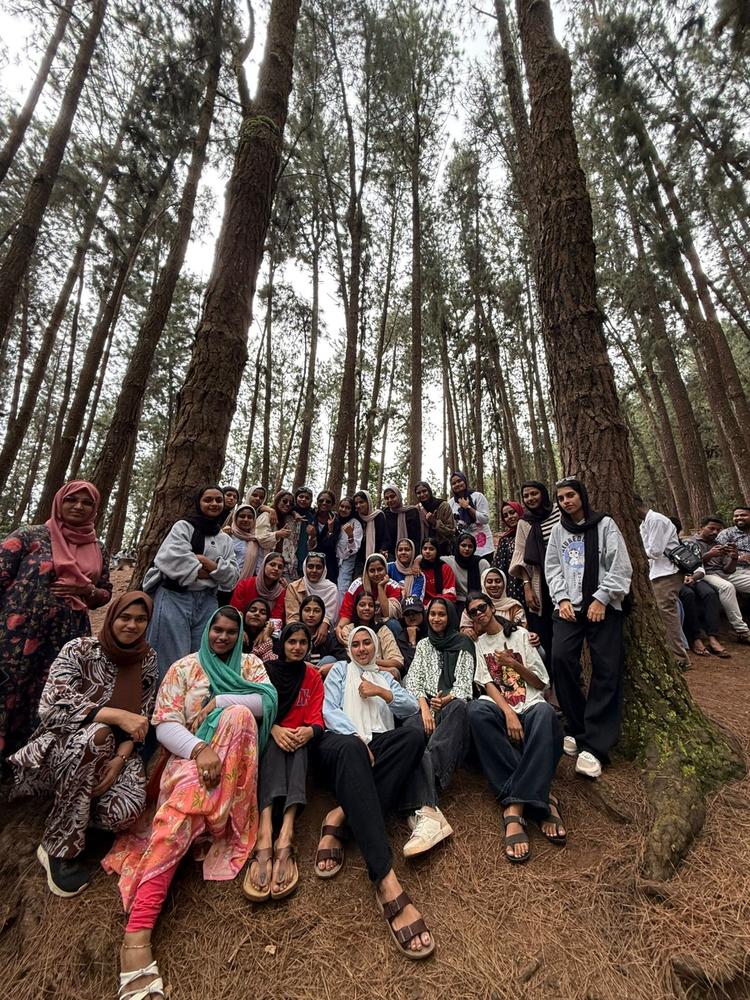
The group visited Kurisumala, a famous pilgrimage and trekking site known for its serene environment and organic farming initiatives run by the monastery. Students observed how religious institutions can contribute to social welfare through sustainable farming and community engagement programs.
d) Mottakunnu Viewpoint
At Mottakunnu, students experienced eco-tourism practices and learned how natural sites are maintained responsibly to attract visitors while preserving biodiversity. The visit reinforced the idea that tourism, when managed ethically, can act as a tool for community development and environmental conservation.
e) Adventure Jeep Trekking
An adventurous jeep trekking experience was arranged as part of the trip. This activity demonstrated how adventure tourism contributes to local livelihoods, promotes rural tourism, and supports micro-entrepreneurship in the region.
Learning Outcomes are gained practical exposure to the operational aspects of small-scale industries and social enterprises,understood the role of social entrepreneurs in promoting sustainable development,identified the link between eco-tourism and social entrepreneurship,developed appreciation for rural innovation and community-based problem-solving,strengthened teamwork, observation, and communication skills through field-based learning.
The faculty coordinators, Ms. Shajla K and Ms. Shiyana E.K, noted that the visit was highly beneficial for the students as it provided experiential learning aligned with the syllabus of Social Entrepreneurship. The interaction with Mr. Ramaiyya offered valuable real-world insights that complemented the theoretical framework discussed in class. The exposure to eco-friendly initiatives also deepened students’ understanding of sustainable business models.
The industrial visit to Vagamon and Ramakkalmedu successfully fulfilled its academic objectives by integrating learning with experience. The trip not only enhanced students’ knowledge of social entrepreneurship but also inspired them to think innovatively about community-oriented business ideas. The visit underscored that true entrepreneurship lies in creating value not only for oneself but for society as a whole.We reached college on 06/10/25 at 7:30 AM.